


The Joint Venture includes conservation partners across the 10-state region who have developed habitat objectives for birds at regional scale. To make bird-habitat implementation more applicable to their respective agencies and organizations, some partners have stepped down the JV regional plans to smaller jurisdictions and or refined how they target regional conservation objectives based on their stakeholder priorities.
Ohio All-Bird Conservation Plan
The Second Ohio All-bird Conservation Plan (2022) is a collaborative effort among individuals representing numerous organizations that serve on the OBCI’s Conservation Planning and Research Committee. This plan has two main functions: to identify ways to “stepdown” regional conservation plans to the state level, and to provide guidance for bird conservation efforts in Ohio.
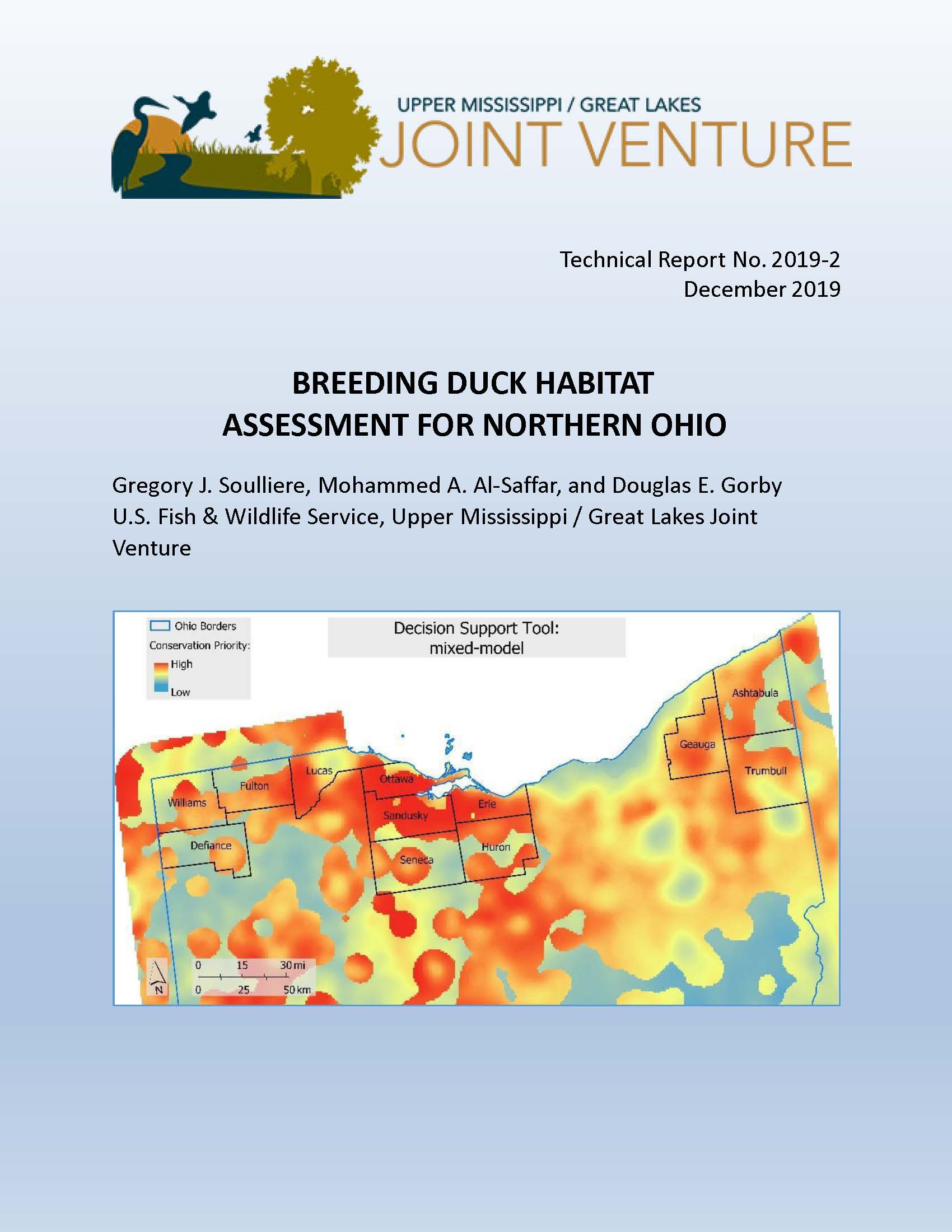
Breeding Duck Habitat Assessment for Northern Ohio
This assessment, completed for the Ohio Waterfowl Production Area Study Team (U.S. Fish and Wildlife Service and Ohio Dept. of Natural Resources), was developed to inform decisions regarding waterfowl breeding habitat establishment in northern Ohio. The primary goal for designated waterfowl production areas (WPAs) is to provide duck habitat with relatively high survival and recruitment during the breeding period while providing benefits to other wildlife and to people.
Wisconsin Waterfowl Habitat Conservation Strategy
This document was developed collaboratively by Wisconsin partners with support from the UMGL JV Science Staff to guide and inform decisions for waterfowl habitat conservation. Conceived as a step-down from the 2017 JV Waterfowl Habitat Conservation Strategy, the Wisconsin strategy integrates technological advances, trends in landscape cover types, and changing attitudes of society since the original Wisconsin Plan was produced nearly 30 years ago.

State Wildlife Action Plans (SWAP)
State Wildlife Action Plans serve as the nation’s blueprints for proactively conserving fish and wildlife to prevent species from becoming endangered. In 2005, each state, territory, and the District of Columbia submitted its first State Wildlife Action Plan. The Plans identified over 12,000 Species in Greatest Conservation Need (SGCN), which includes federal and state threatened and endangered species and other rare or declining species. The Plans describe the habitats important to SGCN, key threats, needed conservation actions, and research and monitoring plans. Agencies are required to coordinate with state, federal, tribal, and local agencies and provide opportunities for public input. The Plans are developed in collaboration with leading scientists, conservation organizations, private landowners, and interested members of the public.